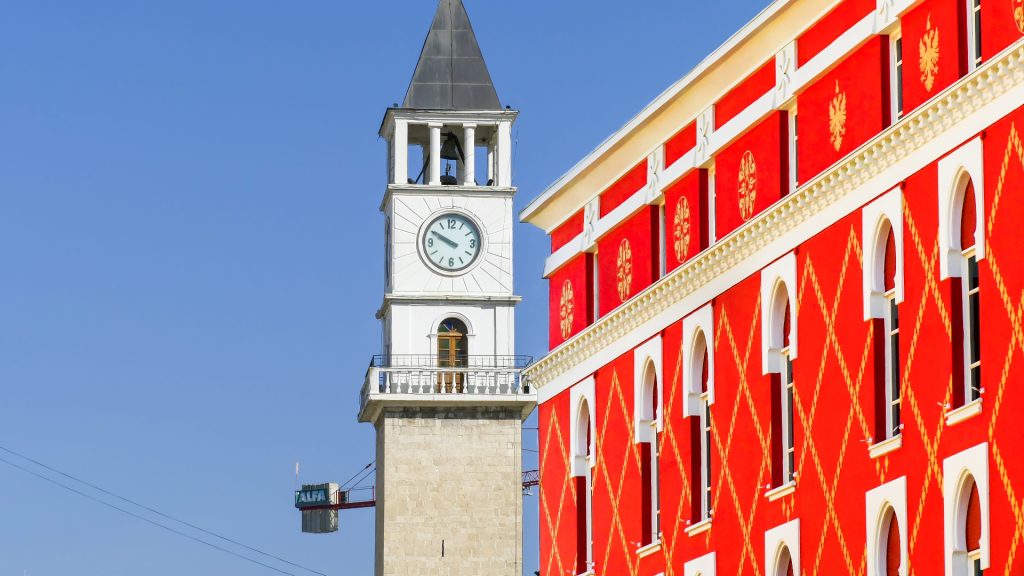
 One reason you might want to visit Tirana, Albania’s capital, could be that it is among the sunniest cities in Europe, with 2,544 hours of sun per year. Visitors also choose it as a destination attracted by its colourful Ottoman-, Fascist- and Soviet-era architecture.
In addition to pleasant weather conditions and pastel buildings, the city has built much of its tourism strategy around fusion food. “We are a destination for many Europeans for delicious food with Middle Eastern, Balkan, Italian and Greek influences that’s cheap,” explains Genci Kojdheli, General Director of the Integration, Economic Development and Strategic Planning Departments at the City of Tirana. A good reason to develop a more comprehensive city food policy.
What’s cooking?
Asking for the chef’s input
As much as it’s already doing, the municipality feels that it needs to take its food-related actions further and build a city-wide strategy to guide its isolated initiatives. Though cities in Albania have little authority over food legislation – mainly in the hands of the National Agency on Food and therefore managed at the national level – Tirana wants to “become a best practice that other cities in the country can be inspired by,” says Kojdheli.
This is why Tirana joined the Food Trails project. “We wanted to learn from other, more advanced, cities that already have developed their food policies. Food Trails has helped us to initiate that process,” explains Kojdheli.
As part of their involvement in the project, Tirana will create a food policy that will include setting up spaces and tools to promote access to quality, local and sustainable food for all citizens. “We have to gather local stakeholders, raise awareness on food waste and promote sustainable and healthy food systems within a city where these issues are perceived as ‘luxury concerns’,” notes Kojdheli. “The average citizen considers that the city should worry about other, more pressing needs. The city, however, understands that we need a food policy. Especially considering our food, catering and culinary industry are crucial components of our economy.”
The average citizen considers that the city should worry about other, more pressing needs.
— Genci Kojdheli
Writing the new recipe together
Tirana’s food policy will be based on consultations with local stakeholders, which started in June 2022, and will include creating a multifunctional food centre. “The multifunctional food centre will be an infrastructure that will bring consumers, local products and farmers together,” explains Kojdheli. “We are putting together a local network of restaurants, bars and food stores that buy and use locally grown ingredients and products. We want to promote local products within our environment.”
Through Food Trails, the team in Tirana will define what concrete actions the centre will promote to support healthy food choices – for example, proposing one day during the week with a special menu based on local organic food. It will also define how and who will collect food surplus and distribute it to citizens in need.
In addition, Tirana is working on promoting and rewarding positive food actions. “We want to start a quality certification process,” says Kojdheli. “We will invite restaurants, bars and suppliers to be part of a platform where they will receive a third-party certification by abiding by certain food standards.” This is a way for the city to publicly reward healthy and local food choices, as well as decisions to reduce food waste.
And the perfect way to bring all this work together in a celebratory way will be to “promote traditional and authentic Tirana products, for example, by organising a Tirana organic food fair on a yearly or even monthly basis,” says Kojdheli. “This is the legacy that we want Food Trails to leave.”